Before We Begin: I Struggled With This One
I should probably admit something before summarizing our first reading: this book put my antenna up almost immediately.
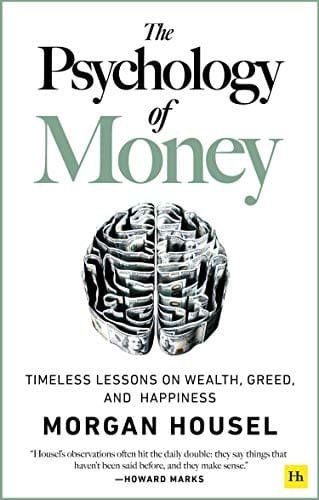
Morgan Housel opens The Psychology of Money with the story of Ronald Read, a Vermont janitor and gas station attendant who quietly accumulated millions of dollars, and Richard Fuscone, a Harvard-educated finance executive who later declared bankruptcy.
And I struggled with that comparison.
Not because I believe a college degree determines someone’s intelligence, worth, or ability to become financially successful. It doesn’t. There are many paths to a good career and financial security, and college is only one of them.
My problem was different.
I wondered whether an extraordinary story about a janitor becoming a multimillionaire risks making something incredibly difficult sound deceptively simple.
Saving and investing matter. Living below your means matters. Patience matters. But so does having money left over to save.
Housing matters. Childcare matters. Healthcare matters. Education matters. Wages matter. And sometimes a household can make responsible financial decisions and still have very little left at the end of the month.
So my first reaction was: Does behavior really beat credentials — or does good financial behavior still depend, at least partly, on the opportunities and resources available to you?
That question followed me through the rest of the reading.
But something else happened: the longer I read, the more I realized that I needed to separate my reaction to Housel’s opening example from the argument he was actually making.
And that’s where the book became much more interesting.
What This Book Is Really About
Housel isn’t arguing that everyone can become a millionaire if they simply stop buying coffee, skip college, and invest the difference.
His larger point is that being knowledgeable about money and being good with money are not necessarily the same thing.
Richard Fuscone knew finance. Ronald Read didn’t have elite financial credentials. Yet knowledge alone didn’t determine their outcomes.
Housel argues that we often treat personal finance like physics — as though financial success comes from learning the correct formulas and following them.
But money doesn’t work entirely that way because people don’t behave like formulas.
Fear matters. Ego matters. Patience matters. Greed matters. Our childhoods matter. The economy we grew up in matters. And sometimes luck and timing matter enormously.
Personal finance, in other words, is partly psychology.
That idea reminded me of a book I read in graduate school, The Millionaire Next Door. Its message stayed with me for a different reason.
The lesson I took from that book wasn’t that everyone could become rich. It was that being wealthy and looking wealthy are two very different things.
You don’t need the Armani suit because someone else has one. Buy something well made that lasts. You don’t need champagne to prove you’ve succeeded. Beer works just fine.
Free beer is even better.
The larger point was about resisting lifestyle inflation: don’t spend your money trying to look wealthy. Build financial security instead.
Housel is asking a slightly different question.
He isn’t just asking, “What are you doing with your money?”
He’s asking, “Why do you behave the way you do with money in the first place?”
And Chapter 1 begins answering that question.
Chapter 1: Your Money Story Is Your Own
Housel’s argument in Chapter 1 is that nobody makes financial decisions in a vacuum.
Every decision that looks “crazy” from the outside may make perfect sense to the person making it because that decision was shaped by experiences we cannot see.
The 80/0.00000001 Rule
Your personal experience with money represents an infinitesimal fraction of everything that has ever happened economically.
Yet that tiny slice of history has an enormous influence on what you believe about money.
That’s fascinating when you think about it.
Someone who came of age during runaway inflation may spend the rest of their life worrying about rising prices. Someone who began investing during a long bull market may have a very different understanding of risk.
People who survived the Great Depression didn’t simply learn about economic catastrophe. They lived through it.
Reading about something and surviving it are two entirely different educations.
There May Be No Universal “Normal”
This was the part of the chapter that resonated with me most.
What looks responsible to one person may look reckless to another. What seems like an obvious financial decision to you may seem impossible to someone else.
And neither person necessarily has the complete picture.
Our financial decisions are shaped by our incomes and expenses, certainly, but also by our families, generations, fears, opportunities and experiences.
That doesn’t mean every financial decision is a good one.
It means that before deciding someone is irrational, it may be worth asking what experiences made that decision seem rational to them.
Key Takeaways
- Financial knowledge and financial behavior are not the same thing.
- Personal experience has an enormous influence on how we think about money.
- Living through an economic event can shape us differently than simply learning about it.
- Behavior matters — but an important question for us to explore is how much circumstances affect someone’s ability to put good financial behavior into practice.
- Before calling someone’s financial choices “crazy,” try to understand the experiences behind them.







No discussions yet
Be the first to join the discussion and share your thoughts with the community.