
Opening
The headlines surrounding the Cornell University lawsuit and the newly appointed special prosecutor force us to confront deeply uncomfortable questions.
A civil suit filed in September 2026 alleges that in October 2024, seven members of Cornell’s Chi Phi fraternity sexually assaulted a 20-year-old student — identified in court papers only as Jane Doe — over several hours in a fraternity house, on a night involving alcohol and ketamine.
It’s important to say plainly what is and isn’t settled. No one has been criminally charged. The local district attorney declined to prosecute in 2024, and after renewed scrutiny of how the case was handled, Governor Kathy Hochul appointed state Attorney General Letitia James as a special prosecutor. Cornell’s own internal process produced expulsions, suspensions, and findings that two of the accused were not responsible for sexual misconduct.
The legal questions are unresolved. Anyone who tells you they already know how this ends is ahead of the evidence.
For parents, educators, and young adults, navigating a story like this is agonizing. It triggers generational clashes over accountability, personal choices, consent, and safety. But stepping back from the fierce debate over individual guilt reveals a broader civics lesson that reaches far beyond a single college campus.
The most enduring question raised by the Cornell case is not only what the primary actors did. It is what everyone else chose to do instead.
A longer read, but an important conversation. This article looks beyond the Cornell allegations to explore why people stay silent, how institutions respond, and what American history can teach us about responsibility.
Jump to a section:
People Are Asking: What About Everyone Else?
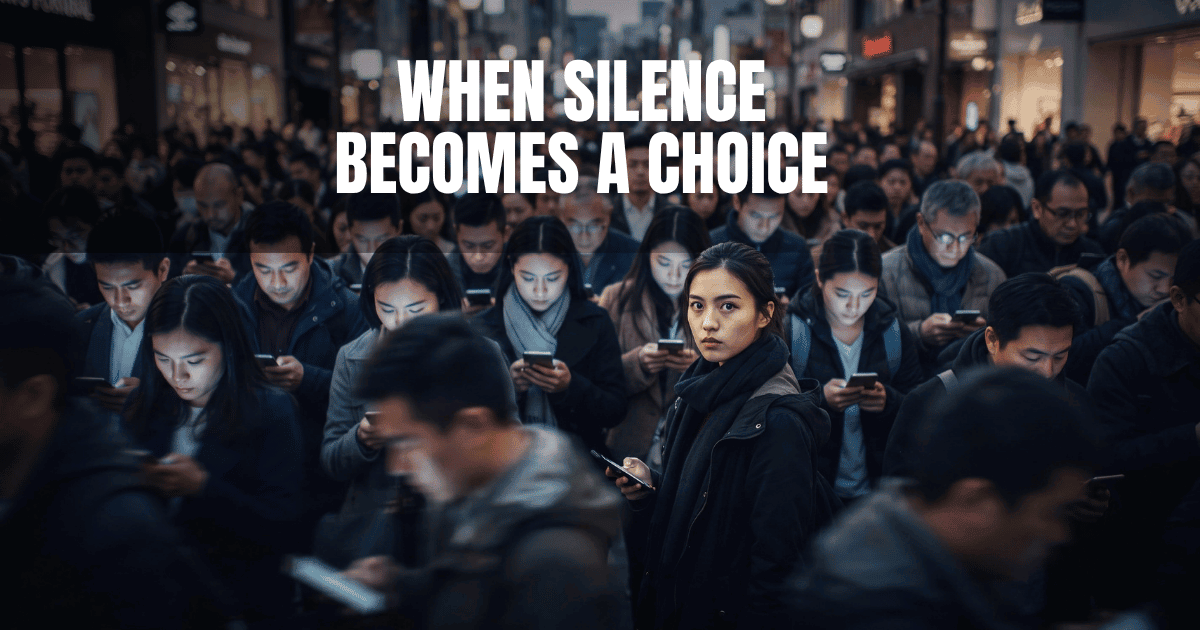
Buried in the lawsuit is a detail that deserves more attention than the identity of the seven defendants. Around 1:42 in the morning, according to a message included in the complaint, a fraternity member posted to the chapter’s Snapchat group chat — a group of more than 50 people — advertising, in crude terms, that there was a woman upstairs. A handful of men allegedly came.
We don’t know how many others saw the message that night. Some may have been asleep. Some may not have opened the message until morning. But the existence of that message raises a question that applies to almost everyone reading this:
PEOPLE ARE ASKING
If something disturbing appears on your screen, what do you owe the person on the other side of it?
That question is bigger than sexual assault. Bullying. Hazing. Racist jokes. Shared intimate photos. A friend talking about hurting someone. A classmate who is dangerously drunk and alone. Almost every reader has already been, or someday will be, in that group chat.
This article is about that moment, and about what American history reveals about how hard it can be to act when the easier choice is to look away.
What Actually Happened
A brief, neutral account of what the record shows so far.
Jane Doe, then 20, says she had been drinking on the night of October 19, 2024, when she went alone to the Chi Phi house to see a male friend. She later told investigators that some of the sexual activity early in the night was consensual. Her lawsuit alleges that what happened afterward was not: she says she was pressured to take ketamine and consume more alcohol, became increasingly impaired, and was sexually assaulted by multiple men.
That distinction matters. The public record contains different accounts of what happened that night and of what Jane Doe initially reported. Tompkins County District Attorney Matthew Van Houten said the statement his office received in 2024 did not allege that she had been drugged against her will or gang raped. Doe’s attorney disputes that characterization and points to her later statements and interviews describing coercion, incapacitation, and sexual activity she says she did not consent to.
Van Houten has acknowledged that his office did not receive Jane Doe’s complete police interview transcripts or Cornell’s internal disciplinary records. Cornell says its police department did provide prosecutors with her signed statement and the Snapchat screenshot.
No criminal charges were filed in 2024. Separately, Cornell’s internal Title IX process reached mixed findings: expulsions and multi-semester suspensions for some of the accused, and findings of no responsibility for two of the seven.
The criminal questions belong to the special prosecutor now — New York Attorney General Letitia James, appointed after Governor Kathy Hochul said she had “lost faith” in the local investigation.
But there are other questions that don’t require us to decide what happened in that room — and they’re the ones most of us will actually face.
The Bystander Effect, Scaled Up
GOOD TO KNOW: THE BYSTANDER EFFECT
Psychologists have long observed what is known as the bystander effect: when other people are present, individuals may feel less personally responsible for stepping in. Someone else will do something. Someone else probably knows more. Someone else is better positioned to help.
Research on this stretches back to the 1960s, long before smartphones. What group chats change is the scale. One alarming message can reach 50 people in seconds — and every person receiving it may assume someone else will respond.
We encounter smaller versions of that choice all the time: a message or joke crosses a line and we stay silent rather than disrupt the room; a friend is dangerously intoxicated and we assume someone else will look after them; behavior turns predatory or cruel and we convince ourselves that speaking up would be awkward, dramatic, or simply “not our place.”
One more piece deserves saying clearly, because cases like this tempt us to skip it. Reporting indicates that Jane Doe went to the fraternity house to see a man she was interested in and that she has acknowledged some initial voluntary sexual activity. None of that settles what happened afterward.
Consent to one act, with one person, is not consent to everything that follows.
A person can say yes to A without saying yes to B — and someone’s earlier choices that night do not eliminate anyone else’s responsibility for the choices they make afterward.
If that sounds obvious, notice how rarely it survives contact with an actual case. “What did she do that put herself there?” is a question that dominated an earlier generation. Answering it was never the same as answering what anyone else did.
Society has gotten better at teaching young people how to define explicit consent. But we spend far less time teaching them how to handle the moral weight of knowing something is wrong while it is happening right in front of them.
When the Bystander Is an Institution
Individuals freeze in group chats. Institutions freeze on paper.
The questions surrounding Cornell’s response go beyond what any individual student did that night. Did campus police interview the accused men at the time? Were the university’s sanctions proportionate to its own findings? And how did a case serious enough to produce expulsions and multi-semester suspensions remain largely outside public view for nearly two years?
Those questions may finally receive a closer examination. On October 6, Cornell announced that former Deputy U.S. Attorney General Sally Yates would lead an independent review of its handling of sexual misconduct allegations, including this case. The review may help clarify how the university responded, what information was available to decision-makers, and whether its procedures worked as intended.
Universities have competing responsibilities. They must protect students, respect due process, maintain confidentiality, and respond appropriately to allegations of serious misconduct. Those obligations can be difficult to balance, particularly when an internal disciplinary investigation and a criminal investigation operate under different rules.
But balancing responsibilities is not the same as avoiding accountability. The question isn’t whether Cornell should have abandoned its procedures. It’s whether those procedures served the people they were designed to protect.
An institution’s responsibility doesn’t end with having rules on paper. It depends on what happens when those rules are tested.
And that tension between power, responsibility, and looking the other way has a very long history. To understand it, we need to look back at some of the people we celebrate most in American history.
History’s Mirror: Why Powerful Men Rarely Act Alone
The politics of looking away isn’t new. American history is filled with examples of people confronting a difficult choice: challenge a person or system that benefits them, or find a reason to live with it.
Thomas Jefferson and accountability.
Sally Hemings was about 14 when she went to Paris in 1787 as an enslaved girl in Jefferson’s household; Jefferson was 44. Rumors about Jefferson and an enslaved woman circulated publicly before journalist James Callender named Hemings in 1802, and the allegations appeared in newspapers across the country. Jefferson never publicly answered them. His family later denied the relationship. Today, Monticello considers Jefferson’s paternity of Hemings’s children settled history.
The important question isn’t whether anyone objected. Some people did. It’s what happens when people know — or know enough to suspect — something troubling about someone who is powerful, admired, or useful. Whatever emotional complexity may or may not have existed between Jefferson and Hemings, we should be careful about pretending we can reconstruct it. We don’t have Sally Hemings’s own written account. But we know something else that makes any discussion of consent impossible to separate from power: he owned her. Jefferson held legal and economic power over Hemings that she could not hold over him. That fact doesn’t erase his political accomplishments. But his accomplishments shouldn’t erase that fact, either.
George Washington and the cost of knowing.
Washington’s views on slavery changed during his lifetime. By the 1780s and 1790s, he privately expressed opposition to the institution and a desire for a legislative plan that would gradually abolish it. And he wasn’t alone. George Mason criticized slavery during Washington’s lifetime. Benjamin Franklin — once an enslaver himself — eventually became president of the Pennsylvania Abolition Society. So the comforting explanation that everyone thought slavery was acceptable back then doesn’t quite work. People in Washington’s own time challenged it. Eventually, Washington himself recognized its injustice.
Yet he continued to participate in it. At his death, 317 enslaved people lived at Mount Vernon. He personally owned 123, and his will provided for their eventual emancipation after Martha Washington’s death.
Here is where we need to be precise: Washington wasn’t a bystander to slavery. He was a participant. He enslaved people. He benefited economically from the institution. Calling him a bystander would actually understate his role. But that distinction doesn’t weaken the argument. It raises a harder question: What happens when recognizing something is wrong doesn’t translate into stopping participation, particularly when doing so requires giving up power, wealth, status, or convenience?
Thomas Jefferson
The question of power: Jefferson’s relationship with Sally Hemings cannot be separated from the fact that he enslaved her.
What happens when admiration for someone’s accomplishments makes it harder to confront their actions?
George Washington
The question of participation: Washington came to oppose slavery in private but continued to enslave people and benefit from the institution.
What happens when recognizing something is wrong requires giving up power, wealth, or convenience?
We made these men national symbols. Their names mark our schools, streets, monuments, and institutions. Their faces even pass through our hands: Washington on the dollar bill, Jefferson on the two. That doesn’t mean their accomplishments disappear because we understand their failures. The Declaration of Independence does not become less consequential because Jefferson enslaved people. Washington’s leadership in creating the republic doesn’t disappear because he remained an enslaver even after questioning the institution.
But neither should greatness become a permission slip for looking away. Perhaps that’s the harder lesson history gives us: admiration does not relieve us of the responsibility to see clearly.
Why People See This Differently
People can look at the same situation, agree completely that sexual assault is wrong, and still disagree about where an individual’s responsibility begins and ends. That’s not cynicism. It’s an honest description of how moral judgment works, and families are living it right now.
A bystander isn’t necessarily a coward. You may genuinely not know what happened. Information may arrive in fragments, or someone else may promise to handle it. Maybe the accused is your friend, and loyalty complicates your judgment. Sometimes intervening carries real personal consequences.
Different roles also carry different responsibilities. Someone accused of committing harm isn’t in the same position as someone who witnessed it. Receiving a disturbing message doesn’t automatically make someone responsible for what happened afterward.
“Not equally responsible” doesn’t necessarily mean “no responsibility at all.”
Understanding why people hesitate doesn’t automatically excuse silence. It helps us recognize what makes speaking up difficult—and why teaching courage is easier than practicing it.
Navigating the Contradictions: A Parent’s Dilemma
I’m the mom of three boys, so this isn’t an abstract question for me — my sons are the reason I’m writing it. When the Cornell story broke, they were the ones who told me I should cover it. What struck me wasn’t that they agreed. It’s that they didn’t.
One of my sons believes some of the young woman’s choices that night are fair to question, while also making clear that those choices would not make her responsible for anyone else’s decision to assault her. My older son has much less patience for even going down that road: nope. Whatever choices she made earlier in the evening, they don’t excuse what someone else may have done later.
Same family. Same values. Two different instincts about which questions matter — and where responsibility begins.
What I didn’t tell them at the dinner table is that I’ve been living inside an older version of this argument. I grew up at the tail end of an era when “she dressed that way, so she deserved it” was still something people said out loud. If I had told my parents as a teenager that I had been sexually assaulted, I’m fairly certain their first question would have been what I had done to put myself in that situation.
We’ve moved a long way from that thinking. But I recognize its fingerprints when the first question we ask about an allegation is what the woman did wrong.
At the same time, raising boys presents another contradiction.
We teach children not to tattle over every petty disagreement. We tell teenagers to stay out of other people’s drama. And I can’t even blame their peers for all of it. I grew up hearing “snitches get stitches.” It was part of the cultural and social rule of my day: mind your business, don’t be the one who tells, and don’t run to an adult over every little thing.
And I have to admit, I passed some version of that lesson along to my own boys.
As they got older, “don’t snitch” became something they heard from friends, too. But somewhere along the way, the lesson has to evolve — even for me.
Because we also turn around and tell them that when something is fundamentally wrong, they need to stand up, even if everyone else stays seated.
Both lessons contain some truth. Children need to learn discretion, loyalty, and how to resolve minor conflicts without turning every mistake into a public trial. But they also need to recognize the line where loyalty becomes complicity and minding your own business becomes an excuse for leaving someone else in danger.
And history doesn’t give us perfect heroes to teach that lesson, either.
Abraham Lincoln’s views on slavery and racial equality evolved, and his decisions as president were shaped by politics, war, and his overriding concern for preserving the Union.
Lincoln did not begin his presidency with the position he would ultimately reach. But as the war continued, the choices before him changed, and so did his response. His presidency eventually became inseparable from emancipation and the destruction of slavery in the United States.
That’s the lesson I want my sons to understand.
Courage doesn’t require instantly knowing exactly what to do. It doesn’t mean treating every bad joke, stupid decision, or minor mistake as a moral emergency. It means learning to recognize the moment when doing nothing has become a choice of its own.
And sometimes that test won’t arrive in a history book.
Sometimes it will arrive in a group chat at 1:42 in the morning, with no parent there to lean on.
What You Can Actually Do
So what are you actually supposed to do when something feels wrong? Cornell itself encourages students who witness sexual misconduct to report it. Its policies also protect students who report in good faith from certain alcohol- or drug-related disciplinary consequences.
But what does speaking up look like in real life?
1. Check in. Ask the person privately if they’re okay or if they want to leave.
2. Interrupt. Create a distraction. Change the situation. Give someone an excuse to walk away.
3. Get backup. Find a friend, resident adviser, bartender, security officer, campus official, or another person who can help. If someone appears to be in immediate danger, call emergency services.
4. Save what you saw. If a disturbing message, photo, or post appears on your phone, don’t forward it around for entertainment. Preserve it. A screenshot may later matter far more than you realize.
5. Report what you actually know. You don’t have to decide whether someone is guilty. Tell the appropriate person what you personally saw, heard, or received, and let investigators determine what it means.
6. Refuse to participate. Sometimes intervention is as simple as not laughing, not forwarding the picture, not piling onto the joke, or saying, “That’s not okay.” Say it even if your voice shakes.
One detail from the Cornell case has stayed with me. According to Jane Doe’s attorney, a fraternity member opened the Snapchat message the next morning and took a screenshot. That screenshot survived.
Think about how small that action was.
He didn’t solve the case. He didn’t determine what happened upstairs. He preserved something he thought mattered.
That’s worth remembering because we sometimes imagine moral courage as something dramatic. Most of the time, it probably isn’t. It may be a question, a phone call, a screenshot, an interruption, or simply refusing to go along with everyone else.
The Question That Keeps Coming Back
Most of us will never sit on a jury deciding a sexual-assault case. We may never run a Title IX investigation or serve as a special prosecutor. But many of us will someday be in the group chat.
You may be the roommate who senses something is off. The friend who sees someone is too intoxicated to make decisions. The student who receives a disturbing message. The coworker who hears the joke that isn’t really a joke.
In those moments, we don’t have to prove that a crime occurred. We don’t have to know the whole story. And we don’t have to appoint ourselves judge and jury.
But we do have to decide whether we’re willing to do something when something doesn’t look right.
History makes these choices look obvious because we already know how the story ends. Real life doesn’t give us that advantage. It gives us incomplete information, competing loyalties, uncomfortable consequences, and sometimes nothing more dramatic than a message appearing on a phone in the middle of the night.
That’s what makes the question so difficult.
Looking away is a choice, too.
And maybe that’s where civics becomes something more than knowing how Congress works or what powers belong to a president. It’s also understanding what we owe the communities we’re part of — and recognizing that we don’t have to commit a harm ourselves to help create the conditions in which it can continue.
Jefferson and Washington remind us how easily admiration and self-interest can complicate moral judgment. Lincoln reminds us that people’s thinking — and their choices — can evolve. The Cornell case reminds us that these questions didn’t stay in the history books.
They landed in a group chat.
In the end, the deepest question may not be what we owe our country, our institution, our friends, or our tribe.
It’s what we owe each other.
JOIN THE DISCUSSION
1. How do you think we can better teach young adults to balance peer loyalty with the moral courage to speak up when something feels wrong?
2. What would you do if a message like that landed in your group chat tonight?
Sources & Further Reading
Cornell allegations and investigation
- CBS News — Timeline, interview transcripts, and university findings
- Associated Press — Appointment of the special prosecutor
- CBS New York — Snapchat group conversation
- The Cornell Daily Sun — Dispute over evidence shared with prosecutors
- Reuters — Sally Yates appointed to lead independent review
- Cornell University — Reporting, evidence preservation, and amnesty policies
History and the bystander effect
- Monticello — Thomas Jefferson and Sally Hemings
- Mount Vernon — Washington’s will and emancipation provisions
- Mount Vernon — Benjamin Franklin
- Mount Vernon — George Mason
- Library of Congress — Abraham Lincoln and emancipation
- Darley and Latané (1968) — Bystander intervention research
Note: The Cornell allegations remain subject to ongoing legal proceedings. Reporting and institutional findings are distinguished from criminal convictions throughout this article.
Continue Reading:
The Cabinet Explained — where you discuss how institutions distribute responsibility.
Checks and Balances Explained — where you discuss the importance of accountability.


No discussions yet
Be the first to join the discussion and share your thoughts with the community.